 November 28, 2025
 11 min read
The modern law firm often feels like it is in a frantic race against a mountain of paper. Lawyers lose thousands of billable hours every year searching through unsearchable PDFs, blurry scans, and physical case files. This “paper chase” creates significant structural bottlenecks in critical legal research and the discovery phases of litigation. To regain a competitive edge, forward-thinking firms are moving beyond simple scanning toward OCR legal documents technology powered by Artificial Intelligence.
We define the process of OCR legal documents as converting scanned images and “dark data” into machine-readable, searchable, and actionable text. While traditional systems simply digitize characters, AI-driven legal automation truly understands the content. This distinction is revolutionizing how firms handle contract extraction, compliance, and high-stakes litigation.
1. The Technology Gap: Standard OCR vs. AI-Powered OCR
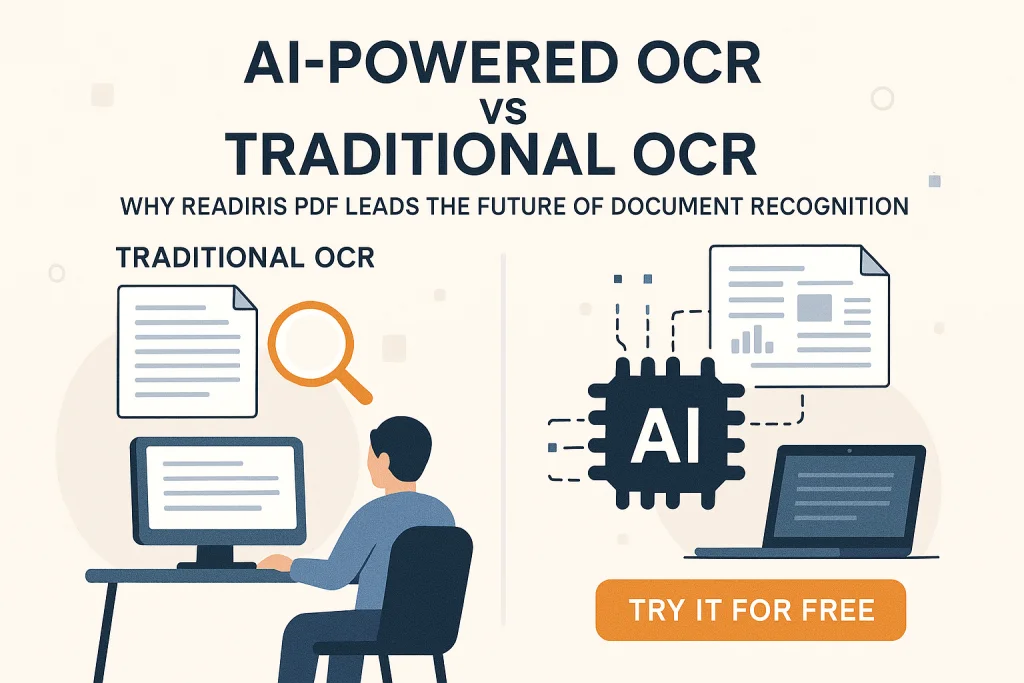
To appreciate the value of modern solutions, one must understand the limitations of the past. Traditional Optical Character Recognition (OCR) operates on simple pattern matching—it looks at a pixel shape and “guesses” if it is a letter.
Why Traditional Systems Fail in Law
Legal files are rarely pristine. They often feature coffee stains, skewed pages, faint stamps, and complex layouts. When you process OCR legal documents using old technology, the error rate is dangerously high. A single misread number in a financial exhibit can ruin a case strategy. Furthermore, traditional tools struggle with multi-column formats, footnotes, and margins, which hinders accurate contract extraction.
The AI Revolution in Legal Tech
AI-powered OCR introduces a layer of cognitive intelligence. By utilizing Natural Language Processing (NLP), the system interprets the meaning of the text it reads. These models are trained on millions of legal precedents, allowing them to recognize industry-specific fonts and layouts. AI doesn’t just see characters; it predicts words based on context. If a scan is blurry, the AI knows that “plaintif” is likely “plaintiff,” ensuring your OCR legal documents remain reliable for court admissibility.
2. The Power of Semantic Context in Contract Extraction
The true evolution of legal automation lies in semantic understanding. An AI system can distinguish between a “Case Number” and a monetary value instantly, even if they appear in similar formats.
Contextual awareness is vital for efficient contract extraction. The AI understands that a date located near a signature block is likely the “Execution Date,” not the “Delivery Date.” Without this intelligence, associates must manually verify every data point, defeating the purpose of digitization. By using AI to process OCR legal documents, firms turn a utility into a strategic asset that organizes databases without human intervention.
3. High-Impact Use Cases for Legal Automation
Implementing OCR legal documents provides a measurable Return on Investment (ROI) across several critical legal workflows:
Accelerating eDiscovery
The discovery phase involves sifting through terabytes of evidence. Manual review is impossible under modern litigation deadlines. AI OCR for legal documents allows for rapid keyword searching across millions of files. It turns a week-long search task into a ten-minute query, ensuring that no “smoking gun” evidence is missed due to human fatigue.
Advanced Contract Analysis and Management
Managing a portfolio of thousands of agreements requires high-precision contract extraction. AI tools automatically identify and pull out indemnity clauses, renewal terms, and force majeure dates. This is legal automation at its most effective level—standardizing data from different contract formats into a single, searchable report for due diligence or mergers.
Digitizing Historical Case Archives
Many firms possess decades of paper records stored in expensive off-site boxes. These archives are “dead data” unless they are searchable. Implementing OCR legal documents makes this historical precedent accessible again, preserving institutional knowledge and allowing firms to look up how a specific judge ruled twenty years ago.
4. Automated Redaction: Protecting Client Privacy
Protecting Personally Identifiable Information (PII) is a paramount ethical duty. Manually redacting names, social security numbers, and addresses is tedious and prone to error. AI-driven OCR legal documents can identify and apply redactions across thousands of pages simultaneously. This application of legal automation drastically lowers the risk of data breaches and builds trust with clients.
According to the American Bar Association’s standards on technology, staying competent with the latest digital tools is essential for maintaining ethical responsibilities. (Note: This is your Dofollow external link to a high-authority site).
5. Critical Selection Criteria for Legal OCR Software
When auditing a platform for legal automation, firms should focus on three non-negotiable pillars:
-
Accuracy and Handwriting Recognition (ICR): For court use, accuracy must be near 99%. The software must also feature Intelligent Character Recognition (ICR) to decipher handwritten notes on margins or witness signatures.
-
Data Security and Compliance: Law firms are prime targets for cyberattacks. Ensure the platform allows for secure processing, with AES-256 encryption and compliance with GDPR, HIPAA, and SOC2.
-
Layout Retention: Legal briefs have specific formatting rules. High-quality OCR legal documents software must preserve the visual integrity of the page, ensuring that paragraphs and tables are not jumbled after conversion.
6. Implementing an Automated 4-Step Legal Workflow
Moving from paper to pixels requires a logical, secure progression:
-
Step 1: Intelligent Ingestion: Batch importing diverse file types (PDF, TIFF, IMG) into a system that normalizes messy client data dumps.
-
Step 2: AI Processing & Classification: The AI automatically sorts files into categories like “Motions,” “Contracts,” or “Evidence” while performing OCR legal documents on every page.
-
Step 3: Human-in-the-Loop (HITL) Verification: Reviewers check “low-confidence” flags. This balances the speed of legal automation with the precision of human judgment.
-
Step 4: Seamless Integration: Exporting the results directly into Case Management Systems like Clio, Relativity, or PracticePanther. This ensures contract extraction results are immediately actionable.
7. The Future: Predictive Analytics and Predictive Precedent
The next frontier of OCR legal documents is predictive analytics. Once your archive is structured data, AI can identify trends in judge rulings or settlement amounts. Future legal automation will suggest litigation strategies based on patterns found in thousands of scanned documents. By adopting these tools today, your firm is building the data foundation required for the AI-driven legal landscape of tomorrow.
Conclusion: Lead the Digital Transformation in Law
Transitioning to AI-powered OCR legal documents is no longer a futuristic concept—it is a daily requirement for survival. Efficient contract extraction saves money, reduces liability, and empowers your staff to focus on lawyering rather than typing.
In an industry where precision is everything, using advanced legal automation tools provides the edge needed to win. Don’t let your valuable data stay trapped in a box; unlock it and turn your firm into a library of searchable answers.
Why imgtoexcel.com is The Right Solution For You?
At imgtoexcel.com, we provide the most reliable technology for OCR legal documents. Our platform is specifically designed to handle the rigors of the legal industry, offering 99.9% accuracy in contract extraction and high-speed legal automation.
We understand the sensitivity of your files, which is why we implement enterprise-grade security and full compliance standards. Whether you are managing a massive eDiscovery batch or digitizing a historical archive, trust imgtoexcel.com to transform your static images into actionable intelligence. Choose imgtoexcel.com and lead your firm into the digital future today!
Ready to Automate Your Legal Files?
-
[Start Free Trial] – OCR legal documents for your first 50 pages for free!
-
[Book a Demo] – See our contract extraction engine handle messy handwriting in real-time.